Improving Day 0 Engagement
A hypothesis-driven onboarding program to guide trialists toward product value—and lift trial-to-paid conversion
Productboard·October 2025
Productboard is a highly sophisticated tool for PM collaboration at scale—but self-service trialists struggled to get started. I led design on a hypothesis testing program built around a more guided Day 0 experience, with a projected +40% lift in trial-to-paid conversion by helping users reach activation faster.
- Task
- Hypothesis testing program to improve trial-to-paid CVR by +40% through guided Day 0 onboarding
- Strategy
- Product design
- Design
- UX/UI design, user research
- Role
- Leading design · supporting research
Challenge
The problem is Day 0
Productboard drives collaboration across multiple PM use cases at scale, but our key challenge was unlocking that value for new spaces trialling the product.
Self-service customers found it difficult to get started and scale usage because Day 0 failed to provide structured paths toward product value. Faced with heavy friction and unclear outcomes, users abandoned trials shortly after starting.
- Trial to paid conversion declined from 4.5% to 1.5% (Q1 '23 – Q1 '25)—a relative drop of 67%
- Day 7 retention is currently less than 20%
- Less than 10% of trials log even 10 onboarding events on Day 0
Defining Day 0 onboarding
Our goal was to guide new trialists through the minimum viable setup steps required to get value as efficiently and effectively as possible on Day 0.
The pathing hypothesis
We believe that when users are guided through a clearer, more educational onboarding experience—with a more coherent sense of purpose—they are more likely to get efficiently set up with relevant data, grasp the value of the product early, and reach activation and multiplayer moments faster.
By laying strong foundations and making the product's power visible from the start through stronger pathing on Day 0, we believed we could drive more trialists to convert into engaged customers embedded in the product over time.
Thedesignprocess
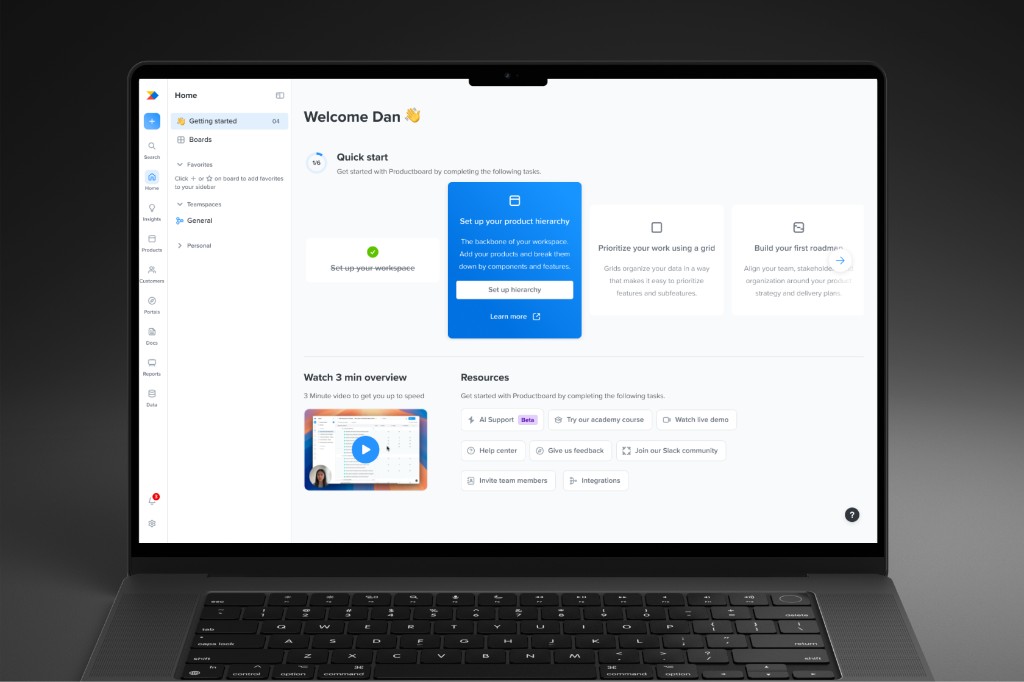
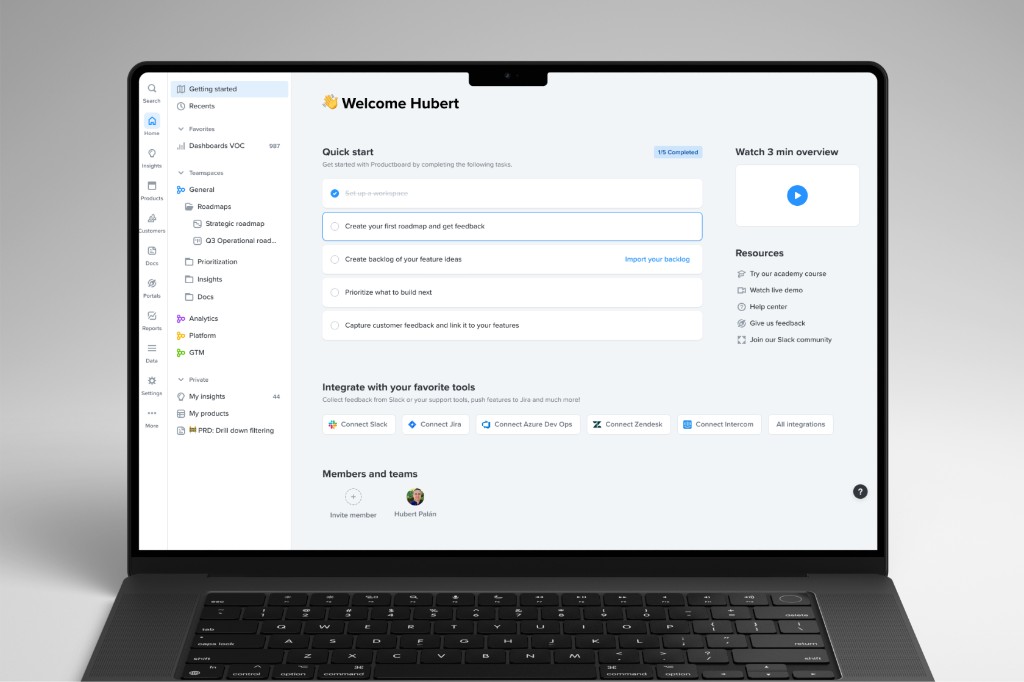
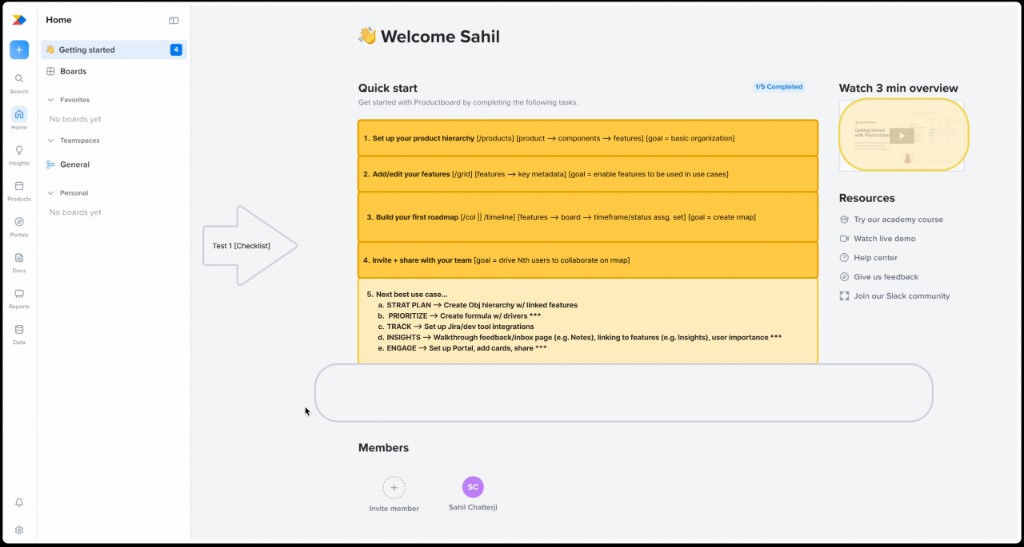
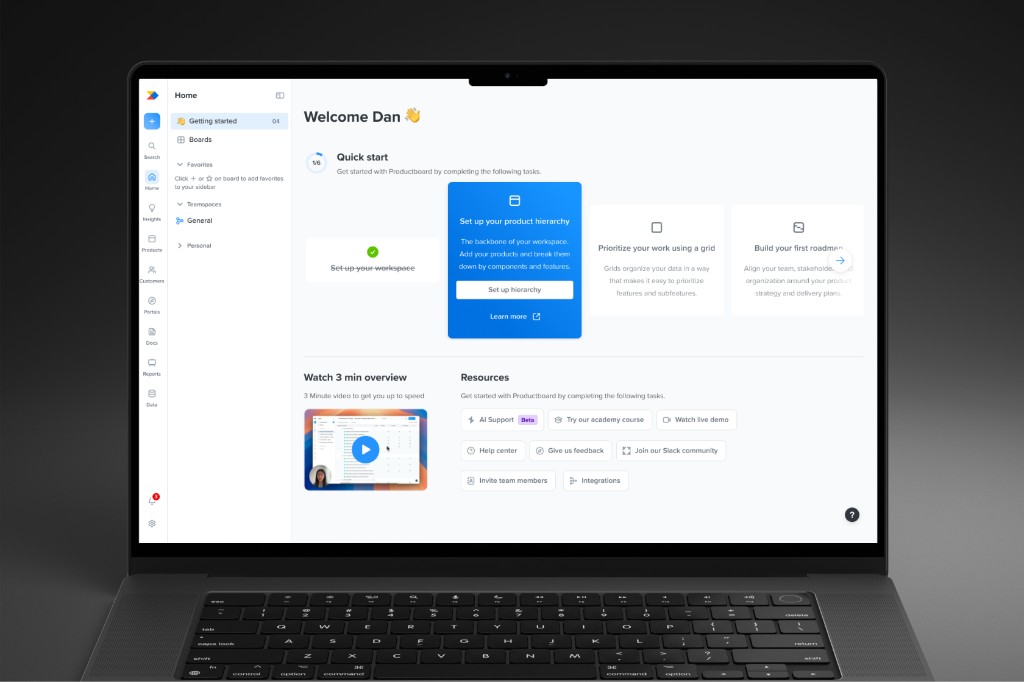
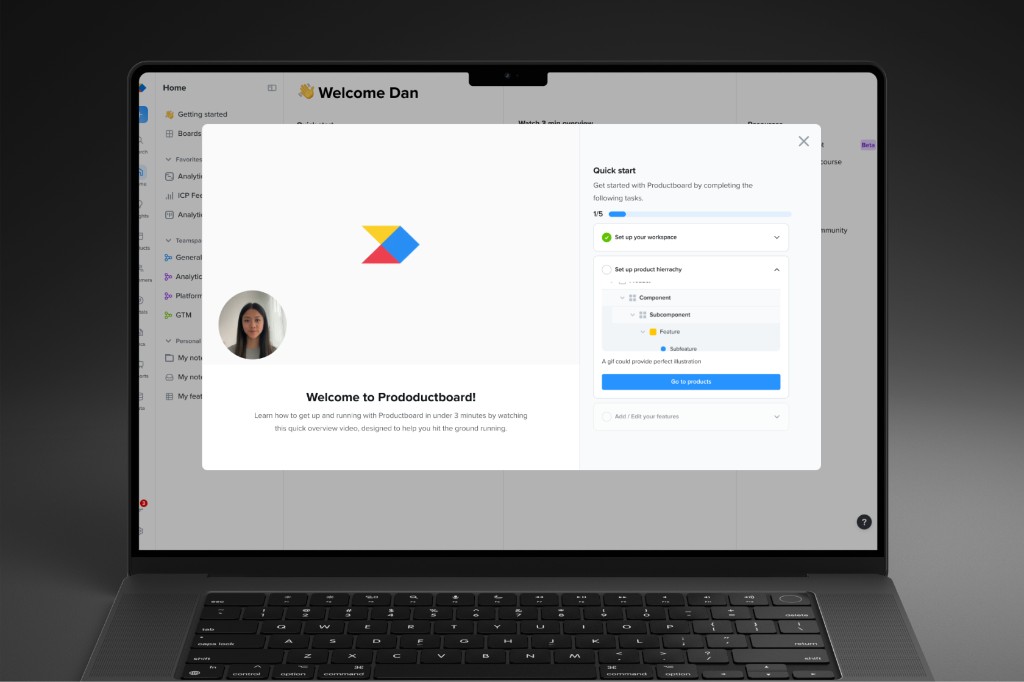
We planned to test our pathing hypothesis on the Getting Started page—every new user lands there after sign-up. Our first bet was a revamped Quick Start sequence that chains each step together and makes it clear how PM use cases translate to board types, data entities, and the action loops that power the product.
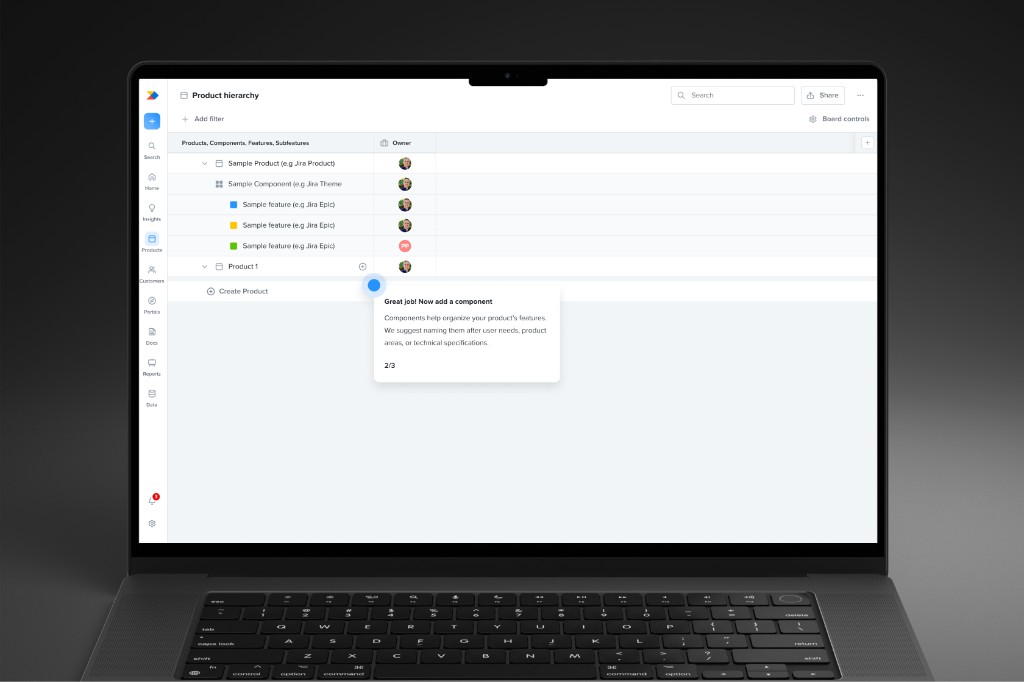
Set up your product hierarchy
Walk users through a short 3–5 step flow on /products: name their product, build structure with components, and define features.
Add and edit features
Take users to a grid board with pre-selected columns (status, team, release, timeframe) so they can set up roadmap-ready data efficiently.
Build a roadmap
Open a timeline board and trigger a product tour that adds their roadmap-ready features to the plan.
Invite your team
Show users how to add teammates and gather feedback on what they have built.
Choose your next use case (optional)
Let users pick which use case to tackle next once the core setup is complete.
In the product
Screens from the shipped experience — hierarchy setup, onboarding, and in-app guidance.
Outcomes
Impact
Live as of October 2025
Shipped to production
The Getting Started redesign went live in October 2025. Performance metrics against the +40% conversion hypothesis will be updated as experiment data matures.
Clear link between Day 0 and conversion
Spaces that hit the 10-event Day 0 threshold are 5× more likely to activate and 4× more likely to convert than an average trial space—giving the team a measurable north star for onboarding experiments.