Trint Stabilise Self Serve
Turning around self-serve revenue with clearer onboarding and a trial that gets people to value faster
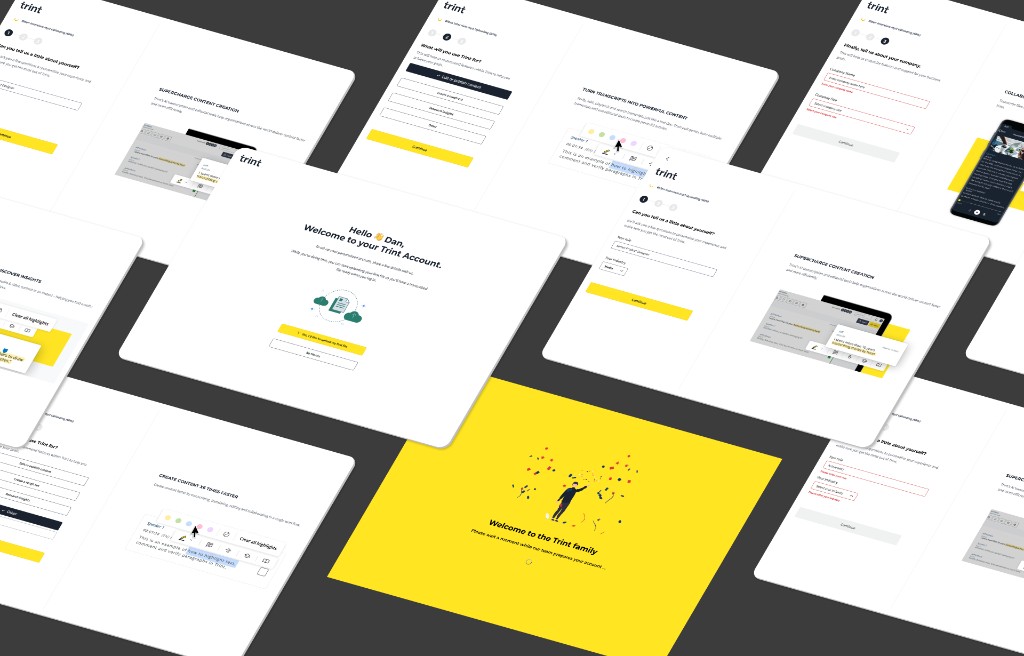
Trint·June 2024
Self-serve makes up about 60% of Trint's revenue, but that number was heading the wrong way while enterprise couldn't make up the gap. In Q2–Q3 2024 I led design on stabilising and growing self-serve: help the right people sign up, and get them to a useful outcome in the trial as quickly as we could.
- Task
- Stabilise and grow self-serve revenue in Q2 and Q3 2024 (increase MRR and ARR)
- Strategy
- UX strategy
- Design
- UX/UI design, user research
- Role
- Leading design, supporting research
Challenge
Self-serve revenue at risk
Self-serve is roughly 60% of Trint's revenue. Enterprise was the long-term bet, but self-serve was falling faster than enterprise could grow.
The squad had a simple brief: make it easier for the right users to join, and improve the trial so people hit the aha moment sooner.
- Increase in-trial conversion from 1% to 1.5%
- Increase in-trial engagement of features by 20% (repeat usage)
- Increase in-trial adoption of features by 10% (first-time use)
Flow1:Personalisedonboarding
We started with a cross-functional workshop. Product, support, and growth each brought their own view of where the trial was breaking down, before anyone jumped to UI.
Our bet: if trialists can actually use Trint properly during the trial, they're more likely to understand the product and convert.
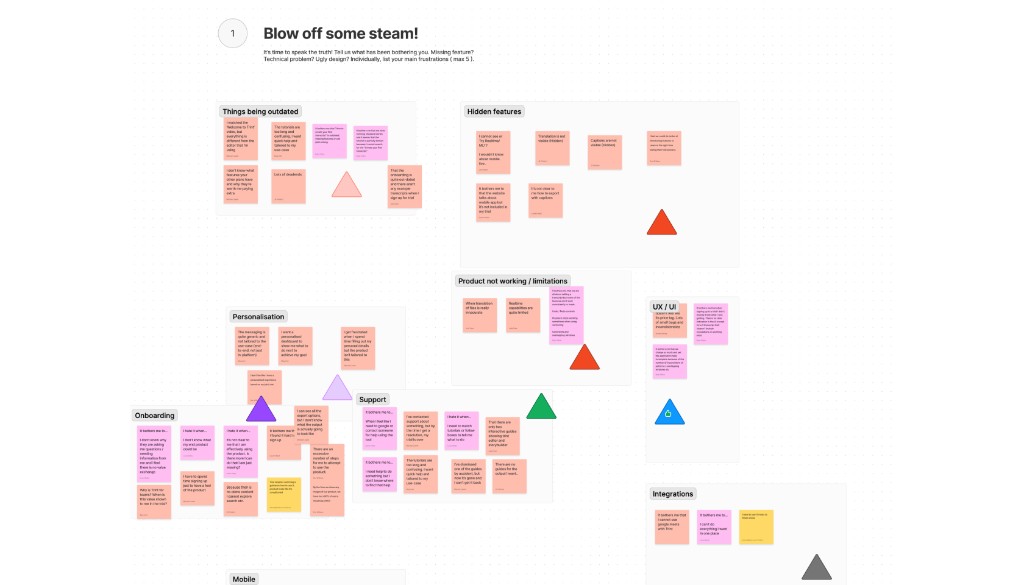
Onboarding hypothesis
If we personalise the first session on web and mobile, trialists see the features that matter to them sooner. That should help them reach their goal and convert to paid.
If onboarding leads with value instead of a feature dump, people are more likely to try things once and come back during the trial.
Trial experience
During the trial, people could only view and edit the first five minutes of a transcript. Full access required a paid plan.
Outcomes
Impact
Uptick in core feature engagement
Stronger feature engagement during trial
More people used core features during the trial. Phase one alone wasn't enough to call a big conversion win, but the engagement trend was strong enough that we pushed to ship the new onboarding flow.
1.05% → 1.6%
Trial-to-paid conversion improved
Baseline conversion over the five months before the trial work was 1.05%. Conversion during the trial period reached 1.6%.